
WHITE PAPER
Lessons from DeForest
August 11, 2026 · 50 pages
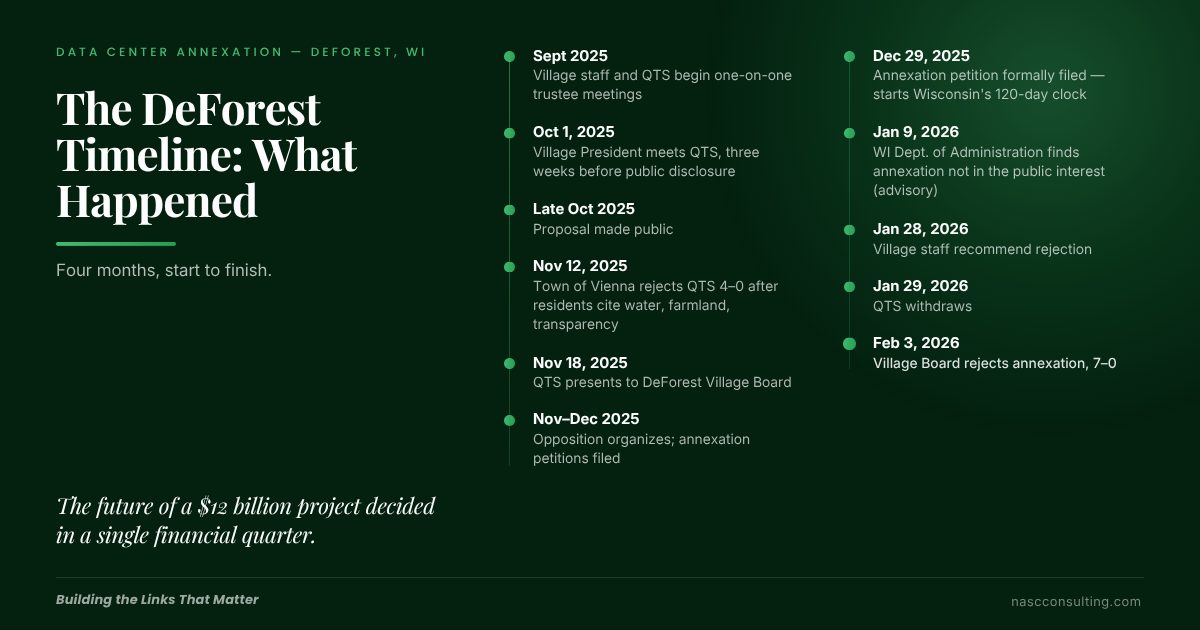
In less than four months in late 2025 and early 2026, a data center proposal worth up to $12 billion moved through the Village of DeForest, Wisconsin, and collapsed. Neither side got what it wanted. The developer withdrew, and the community was left with a year of trust to rebuild and no investment to show for it.
This paper walks through what happened, not to re-litigate DeForest's decision, but to name the five structural gaps behind it: no data center policy before the proposal arrived, no transparency protocol, an overwhelmed staff, an infrastructure assessment that arrived too late, and no organized channel for resident input. Together they made a four-month sprint feel inevitable when it wasn't.
DeForest is not an outlier. The same pattern has already played out in Menomonie, Greenleaf, and Caledonia, and no statewide framework is coming before 2027. At least ten Wisconsin communities have answered by hitting pause.
The alternative is a short list, and none of it requires a proposal on the table: a readiness audit, zoning written before a developer arrives, a community benefit agreement that survives a change in ownership, and an engagement process that doesn't wait for opposition to organize. All of it is cheaper built in advance.
A prepared community isn't one that says yes to every proposal, or no to all of them. It's one that can make either call on its own terms, and explain it to residents with a straight face.
Key findings
- Four months, start to finish. The clock isn't the developer's; it's statutory. Wisconsin gives a municipality 120 days from a completed annexation petition to act on it, which means the timeline is set before the conversation starts.
- The value isn't payroll. Microsoft's Mount Pleasant campus is projected to employ about 800 people against more than $7 billion in investment. Meta's Beaver Dam campus, more than 100. The case for hosting one of these rests on tax base, infrastructure, and negotiated benefits, not on permanent employment.
- There's no longer a partisan lane to stand in. 76% of Wisconsin voters now say the costs of large data centers outweigh the benefits, up from a slim majority in October 2025, with majorities in every party, age group, and income level landing on the costs side.
Weighing a large infrastructure proposal in your community?
LET'S TALK